Whether for clinical training, educational purposes, or general medical device familiarity, understanding the basic syringe parts and how each component contributes to overall function provides foundational knowledge applicable across virtually every syringe type. This overview walks through the primary components found in a standard syringe design.
The Barrel as the Main Body
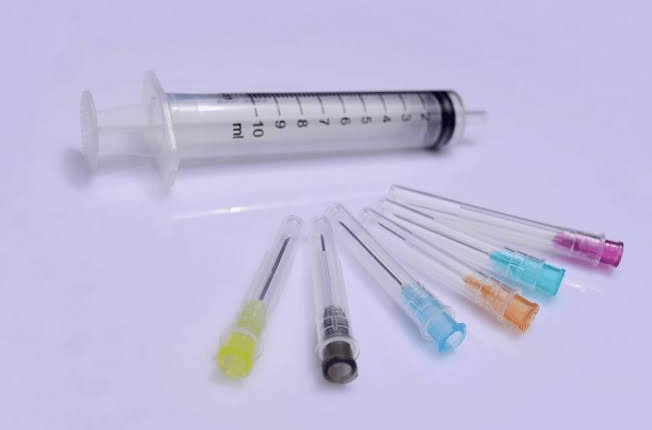
The barrel forms the main cylindrical body of the syringe, holding the fluid to be injected or withdrawn, and featuring the calibration markings along its length that allow accurate volume measurement during use.
The Plunger for Fluid Movement
The plunger is the component that moves within the barrel, and pulling it back draws fluid into the barrel while pushing it forward expels fluid out through the tip, providing the basic mechanical action that makes fluid handling possible.
The Tip for Connection Purposes
Positioned at the opposite end from the plunger, the tip is where the needle or other connecting device attaches, with tip design varying across syringe types depending on whether luer lock, luer slip, catheter, or other connection styles are required for the intended application.
The Flange for Grip Stability
The flange, the flared portion at the base of the barrel opposite the tip, provides a stable grip point that allows users to hold the syringe steady with one hand while operating the plunger with the other, supporting controlled, accurate operation.
See also: Navigating the Complexities of Corporate Analysis: A Guide for UK Business Students
The Plunger Seal for Fluid Containment
At the end of the plunger inside the barrel, a rubber or synthetic seal, sometimes called a stopper, creates a tight fit against the barrel’s interior surface, preventing fluid leakage while allowing smooth plunger movement during operation.
How These Components Work Together
Understanding how these individual components function together, from the barrel holding fluid and displaying measurement to the plunger driving fluid movement and the tip enabling connection, provides a complete picture of basic syringe operation.
Building Foundational Component Knowledge
For a more detailed visual breakdown of these components, reviewing information on syringe parts helps establish foundational knowledge useful for clinical training and general medical device familiarity.
Frequently Asked Questions
What is the primary function of the barrel in a syringe? The barrel forms the main cylindrical body that holds the fluid, featuring calibration markings along its length that allow accurate volume measurement during use.
How does the plunger contribute to syringe function? Pulling the plunger back draws fluid into the barrel, while pushing it forward expels fluid out through the tip, providing the basic mechanical action underlying fluid handling.
What role does the plunger seal play in syringe function? The plunger seal creates a tight fit against the barrel’s interior surface, preventing fluid leakage while still allowing smooth plunger movement during normal operation.
Final Thoughts
Understanding the basic parts that make up a standard syringe, including the barrel, plunger, tip, flange, and plunger seal, provides foundational knowledge applicable across virtually every syringe type and application. This component-level understanding supports both clinical training and general medical device literacy.